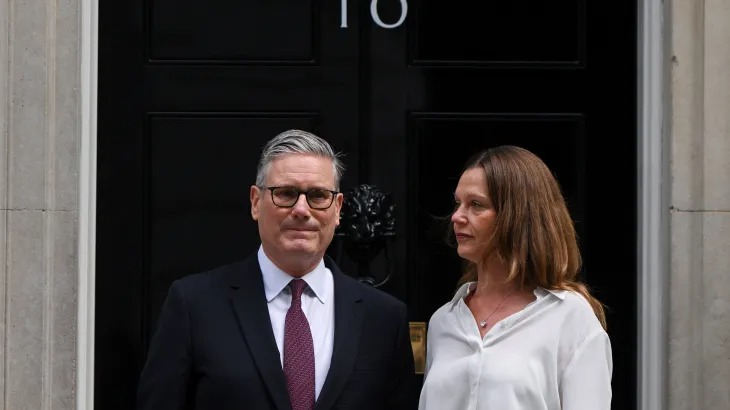
Speaking with visible emotion as music played in the street outside, Starmer announced his resignation on Monday, June 22, 2026, as leader of the Labour Party. However, he said he will remain in post until a successor is appointed.
His exit follows mounting political pressure and deepening unease within his party, with former Manchester mayor Andy Burnham now emerging as the frontrunner after a by-election win that intensified momentum for a change at the top.
He says he will ask the National Executive Committee of the Labour Party to set out a timetable with nominations opening on 9 July and completed by the summer recess.
In the case of a contest, he says this will ensure a new leader is in place before Parliament returns on September 1.
In his resignation speech he said, “when I leave the biggest job in the country, I shall spend more time on the most important job: Being the best husband I can to my fantastic wife Vic, who has been a rock by my side through good times and bad, and being the best dad I can to my beautiful children, who are my pride and my joy”.
Starmer swept to power in July 2024 with a landslide victory, delivering 411 seats in the House of Commons and a majority of 174.
It marked Labour’s third-best result after the eras of Tony Blair in 1997 and 2001. Addressing supporters, he promised Britain had a chance “to get its future back”.
Yet the scale of victory hid a weakness: Labour secured just 34% of the vote.
Before politics, Starmer worked as a senior lawyer and led the Crown Prosecution Service. He entered frontline politics relatively late and became Labour leader in 2020 after Jeremy Corbyn.
Despite the election win, his popularity fell sharply. Polling expert John Curtice said he lacked a clear political story, calling him a skilled lawyer but not a natural political leader.
Professor Tim Bale added that he struggled to communicate a vision or inspire loyalty.
Approval ratings plunged
By mid-term, Ipsos recorded a net satisfaction score of minus 66, the worst for any UK prime minister since records began in 1977.
Even Liz Truss, who lasted just 49 days in office, did not fall as low in some measures.
Starmer entered office during a cost-of-living crisis, strained public finances and pressure on public services.
His government struggled to define its direction, while critics said he failed to set out a clear Labour identity.
Academic Oliver Eagleton argued Labour drifted toward the centre without a strong narrative, leaving voters unsure what it stood for. Anand Menon said Starmer wrongly assumed stability alone would solve Britain’s political problems.
Policy setbacks mounted
His decision to restrict winter fuel payments for pensioners sparked anger before a U-turn. Chancellor Rachel Reeves faced criticism for her tax-raising budget, while planned disability cuts triggered rebellion, with 49 Labour MPs voting against the government.
A damaging controversy followed the appointment of Peter Mandelson as US ambassador, despite concerns over his links to convicted sex offender Jeffrey Epstein.
Starmer apologised to victims after questions about the vetting process.
Further pressure grew as ministers, including Shabana Mahmood, Yvette Cooper and Wes Streeting, pushed for change, while electoral losses to Nigel Farage’s Reform UK intensified unrest.
Attention then turned to Andy Burnham. After initially resisting his move, Starmer allowed him to return to Westminster. Burnham won a decisive by-election in Makerfield, securing over half the vote.