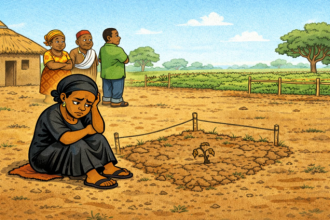
The story of a young Ghanaian who was killed in Latvia struck me the hardest.
“Nana Agyei was a first-year Electrical Engineering (Adaptronic) student at the Riga Technical University, having enrolled in July 2024.
His life was tragically cut short on June 4, 2025, in what Latvian authorities initially reported as a fall from the sixth floor of his apartment building on Baznicas Street in Riga.
However, the family has strongly disputed this account, citing a disturbing voice note Nana Agyei sent just three days before his death, in which he claimed he had been poisoned.”
The family also hinted on Facebook that their son had been constantly harassed by some of his peers at school. Due to this situation, a couple of friends claimed they wanted to help him, only for them to allegedly poison him instead. How cruel and painful.
Betrayal
In Ghana, some individuals and organisations have gone through similar ordeals.
In the past, some organisations pretended to help unsuspecting people save and invest their money.
They promised higher returns to attract victims.
Many people rushed to deposit their funds.
In the end, their monies were never paid back, not even the interest promised.
It was simply a Ponzi scheme.
What looked like help later turned into hatred toward the organisation.
Some relationships have also been destroyed because of this problem.
Some unscrupulous individuals, who call themselves “connection men,” have duped people by claiming they can help them secure visas to Western countries.
Victims paid huge sums of money, only to receive no calls again.
These so-called helpers switched off their phones and vanished into thin air.
A report by Citi News further explains this danger.
The police at Kasoa in the Central Region arrested a suspect linked to human trafficking in Burkina Faso.
The suspect allegedly lured her boyfriend to travel with her, claiming she would join business partners in Spain.
The victim was abducted in Burkina Faso and coerced into luring other possible victims.
He was told to bring other clients if he wanted his money back.
His phone was seized, and he was left hungry for days (citinewsroom.com).
This is not all.
In Ghana, some politicians have promised heaven on earth to electorates, claiming they would lift them out of poverty and hardship. In the end, many people experienced rising hardship and lost opportunities.
What appeared to be help later turned into betrayal.
Some citizens even decided not to vote at all.
Even immediate families have not been spared.
Some family members abroad trusted relatives in Ghana and sent them money to build houses.
When they returned home, they realised nothing had been done and the money had been squandered.
What made it more painful was that fake pictures of completed buildings were sent to create the impression that work was ongoing.
These are not just stories.
They represent broken hearts, shattered dreams, mistrust, lost dignity, hatred and in some cases, ill health and death.
Another tragic case was reported: a 45-year-old Ghanaian deportee from Germany allegedly committed suicide in Kumasi.
The swindling was said to be a contributory factor to the suicide (classfmonline.com, 2021).
Awareness
Some people believe that some of these swindlers use magic or “juju.” Regardless of such beliefs, fraud remains a serious threat.
The Ghana Police Service has issued warnings about persistent fraudulent activities and deceptive advertisements on mainstream and social media platforms, describing them as unethical and criminal acts that threaten national security (sikamantimes.com, 2022).
This world may not be completely wiped of such wickedness. However, unsuspecting victims must exercise a high level of caution.
As the Bible cautions us: “Do not believe every spirit, but test the spirits to see whether they are from God.” (1 John 4:1)