The Artemis II Mission Is a Wake-Up Call for African Leaders
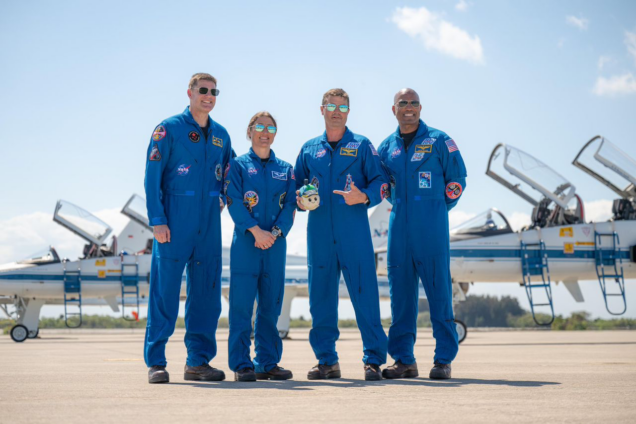
On the 1st of April, 2026, humanity’s most ambitious crewed lunar journey in over half a century lifted off, and nine days later, on April 10, it concluded with a successful splashdown in the Pacific Ocean. The Artemis II mission sent Commander Reid Wiseman, Pilot Victor Glover, Mission Specialist Christina Koch, and Canadian Space Agency astronaut Jeremy Hansen on a 694,481-mile voyage around the Moon and back. They became the first humans in history to see the far side of the Moon with their own eyes, captured over 7,000 images, tested life support systems for future deep-space travel, and broke the record for the farthest distance any human crew has ever travelled from Earth, reaching 252,756 miles (406,771 km), surpassing even the record set by Apollo 13. Millions across the world watched in awe. Governments on every inhabited continent took note. Corporate boardrooms recalibrated their technology roadmaps.
And across Africa, a continent of 1.4 billion people and home to some of the most scientifically critical geography on Earth, most governments did not even issue a statement.
Consider the scale of the gap that silence represents. As of 2026, the United States alone operates over 3,400 satellites in orbit, more than any other nation by a vast margin. Meanwhile, only 18 African countries have any satellites in space whatsoever, with Egypt leading the continent with 14 satellites and South Africa following with 13. The entire African continent, all 54 nations, 1.4 billion people, and some of the world’s fastest-growing economies, has a smaller satellite footprint than a single American technology company. And yet, the orbital space directly above Africa is among the most valuable on Earth.
That silence should disturb every African leader, every policymaker, and every citizen who cares about where this continent will stand in the next fifty years.
The Moon Is Not the Point — The Data Is
It would be easy to dismiss missions like Artemis II as expensive theatre for wealthy nations, grand spectacles that have nothing to do with the price of cocoa, the flooding of farmlands, or the unreliable mobile networks that frustrate ordinary Africans every day.
But that framing is precisely the misunderstanding that keeps Africa trapped in a cycle of technological dependency. Space exploration is not about planting flags on distant rocks. It is about control over the invisible infrastructure of modern civilisation: the satellites that route our phone calls, the systems that predict when the next drought will arrive, the networks that guide aircraft over the Sahara, and the data pipelines that tell climate scientists what is happening in the Gulf of Guinea.
Every GPS signal you use passes through the ionosphere, a charged layer of Earth’s upper atmosphere sitting between 60 and 1,000 kilometres above our heads. In equatorial regions like sub-Saharan Africa, the ionosphere is particularly turbulent. It produces phenomena that degrade satellite signals, disrupt communications, and introduce dangerous inaccuracies into navigation systems used in aviation, maritime operations, and precision agriculture. Scientists call these phenomena equatorial plasma bubbles and ionospheric scintillation, and they are most severe precisely over the African continent.
Here is the problem: Africa, the region most affected by these disturbances, is also the region that contributes the least data for studying and predicting them. The monitoring stations are sparse. The satellites are foreign-owned. The models that international agencies use are built largely without African input. We are, in effect, trying to forecast the weather in our own backyard using our neighbour’s thermometer, a neighbour who operates over 3,400 satellites while we collectively manage fewer than 50 across the entire continent.
This is not merely a scientific inconvenience. It is a strategic vulnerability with daily, measurable consequences for African lives and African economies.
Africa Owns the Most Valuable Real Estate in Space — And Doesn’t Know It
Here is a fact that should make every African leader sit up straight: the orbital slots directly above the African continent are among the most commercially and strategically valuable positions in space.
Most telecommunications, weather, and broadcasting satellites occupy what is called Geostationary Orbit (GEO), a band sitting approximately 35,786 kilometres above the equator. At this altitude, a satellite orbits at exactly the same speed as Earth rotates, meaning it hovers permanently over the same point on the ground. This makes GEO satellites ideal for telecommunications, weather monitoring, and television broadcasting.
Because Africa’s massive landmass straddles the equator more than any other continent, the geostationary arc directly above Africa covers an enormous portion of the globe. The orbital slots above the continent offer unrivalled lines of sight to populations across sub-Saharan Africa, the Sahel, the Horn of Africa, and into the Middle East and southern Europe. For a telecommunications company, a weather agency, or a military establishment seeking persistent surveillance capability, these positions are extraordinarily valuable.
And almost none of them are occupied by African satellites.
Instead, the orbital slots above Africa are filled with spacecraft operated by the United States, Europe, China, and Russia. African telecommunications companies pay licensing fees and leasing costs to use transponder capacity on these foreign satellites to broadcast African content, deliver African internet services, and monitor African weather, all from infrastructure owned by others, governed by foreign regulatory bodies, and answerable to foreign shareholders.
This arrangement has a name in economic terms: resource extraction. The resource being extracted is not oil or minerals; it is orbital geography. The International Telecommunication Union (ITU) allocates orbital slots on a first-come, first-served basis. Nations that file for and occupy a slot can hold it; nations that do not lose access to positions that are rightfully within their geographic sphere. Africa has been slow to file, slow to build, and slow to occupy, and the most coveted positions above the continent have been claimed by others.
This is not an irreversible situation. But it will become one if African nations continue to treat space as someone else’s concern.
What the Artemis Era Means for African Nations
The Artemis programme is not simply a return to the Moon; it is the opening act of a new geopolitical order in space. Artemis II proved definitively that humans can operate in deep space: the crew survived ten days beyond low Earth orbit, tested life support systems under real mission conditions, and returned safely, laying the essential groundwork for future lunar landings. The nations participating in this programme are not just earning bragging rights; they are shaping the norms, laws, and technological standards that will govern space activity for generations.
The Artemis Accords, signed by dozens of nations, including many small and developing economies, establish the framework for how lunar resources will be used, how space missions will be conducted transparently, and how disputes will be resolved. African countries that remain absent from these conversations will find, in ten or twenty years, that the rules were written without them, just as happened with the international financial system, internet governance frameworks, and the intellectual property regimes that currently constrain African innovation.
History is not kind to those who arrive late to foundational conversations.
The Climate Crisis Africa Cannot Afford to Monitor Blindly
Africa bears a disproportionate burden of climate change. The continent contributes less than 4% of global greenhouse gas emissions, yet faces some of its most catastrophic consequences: intensifying droughts in the Sahel, rising sea levels threatening coastal cities like Accra and Lagos, and unpredictable rainfall patterns destroying harvests across East and Southern Africa.
Effective response to this crisis demands precise, continuous, locally generated climate data. Without African-owned or African-operated satellite systems, the continent depends entirely on data collected and interpreted by institutions in the United States, Europe, and China, nations whose combined satellite fleets dwarf Africa’s entire space presence, and institutions that have their own research priorities, budget constraints, and, inevitably, their own blind spots.
The consequences are not abstract. When regional climate models lack accurate data for the Congo Basin, the world’s second-largest tropical rainforest, the predictions they produce for the entire African rainfall system become unreliable. When ocean monitoring off West Africa’s coastline is thin, the forecasts that fishing communities and port operators depend on become less accurate.
Africa needs its own eyes in the sky. Not as a luxury, but as a necessity.
The Human Capital Crisis: A Solvable Problem We Are Choosing Not to Solve
Ghana, Nigeria, South Africa, Kenya, Ethiopia, across the continent, there are brilliant young men and women who have gone to university, fallen in love with physics, mathematics, atmospheric science, aerospace engineering, and remote sensing, and then found themselves with nowhere to go.
The MPhil and PhD programmes that train the scientists who could build Africa’s space future are underfunded. Scholarship opportunities are scarce. Research grants are nearly non-existent. And so, what happens? These young people emigrate. They go to Germany, the United Kingdom, Canada, and the United States, where their brilliance enriches institutions that then sell their discoveries and services back to Africa at a premium. This is the brain drain that everyone laments and almost no one in power takes seriously enough to stop.
In Ghana specifically, the University of Ghana, Kwame Nkrumah University of Science and Technology (KNUST), and the University of Cape Coast have produced generations of graduates in the basic sciences. Many of these graduates have the intellectual foundation to contribute to space science, atmospheric research, and earth observation. But without government investment in their advanced training, they cannot realise that potential.
What would it cost to sponsor fifty Ghanaian students annually through MPhil and PhD programmes in space science, atmospheric physics, remote sensing, and related disciplines? Compared to the cost of one kilometre of highway, or one government delegation’s travel budget for international conferences, it would be negligible. Compared to the long-term return, in scientific capacity, technological independence, and the ability to train the next generation, it would be transformative.
The investment is not expensive. The failure to invest is.
A Direct Message to African Leaders — and Ghanaian Leaders in Particular
You were elected to make decisions about the long term, not just the next election cycle. The farmers who voted for you need climate predictions to decide what to plant. The businesses that drive your economy need reliable communications infrastructure. The young people who are the foundation of your national future need a reason to stay and build. Space science delivers on all three.
Ghana took a promising step in 2017 with the launch of GhanaSat-1, a small cube satellite developed partly by students at All Nations University College with support from JAXA. It was a remarkable achievement. But a single nanosatellite launched once is not a space programme; rather, it is a proof of concept. The question is whether Ghanaian leadership will treat it as the beginning of something serious or as a one-time novelty.
The answer requires action on several fronts:
Establish a properly funded national space agency with a clear mandate, a multi-year budget, and accountability to Parliament. Ghana’s current space efforts are fragmented. Coherence and continuity are essential.
Create a national scholarship programme specifically targeting advanced studies in the basic sciences such as physics, atmospheric science, geophysics, mathematics, computer science, and electrical engineering, with fifty to one hundred scholarships per year, renewable for doctoral study, and a structured return-of-service programme.
Build ground-based scientific infrastructure: ionospheric monitoring stations, GNSS receivers, and meteorological observation networks that can generate locally grounded data that international science currently lacks for this region.
Seek regional partnerships through the African Union’s space strategy, combined with bilateral partnerships between Ghana, Nigeria, South Africa, Kenya, and others. The model of the European Space Agency is directly applicable to the African context.
Invest in science education at every level. The pipeline for future space scientists begins in the Junior High School classroom. That curiosity must be met with qualified teachers, well-equipped laboratories, and the signal that a career in science is honourable, rewarded, and consequential.
The Cost of Doing Nothing
When we talk about investment in space science, we are often asked: why spend money on this when so many more immediate problems demand attention? The question misunderstands what space science actually does. It is not a vanity project competing with healthcare or road infrastructure. It is the upstream infrastructure that makes all downstream development more effective.
Accurate climate data means better-targeted agricultural policies. Reliable satellite communications mean telemedicine that reaches rural hospitals. Ionospheric monitoring means more accurate GPS for the logistics companies that move goods across the continent. Remote sensing from orbit means better-informed conservation policies for the forests and rivers that sustain African ecosystems.
The question is not whether Africa can afford to invest in space science. The question is whether Africa can afford not to.
In 1957, when the Soviet Union launched Sputnik, most nations in the world watched without understanding what it meant. Within twenty years, the nations that had grasped its significance had transformed their economies, militaries, and scientific institutions. Those who had not paid attention were still catching up thirty years later.
The Artemis II mission is this generation’s Sputnik moment for Africa. Four astronauts travelled over 694,000 miles, farther from Earth than any human crew in history, returning safely after proving that sustained deep-space human operation is possible and not theatre. It is the opening of a new era.
Conclusion: The Choice Before Us
Africa stands at a crossroads that generations before us did not face with such clarity. The tools exist. The knowledge exists. The young talent exists, scattered across campuses from Accra to Nairobi, from Abuja to Cape Town, waiting for the signal that their countries believe in what they are studying.
The Artemis programme will go on with or without Africa’s participation. The satellites will orbit, many of them directly above African soil, in slots that could and should belong to African nations. The data will be collected. The models will be built. The new space economy, which is projected to reach over a trillion dollars annually within a decade, will grow. The only question is whether Africa will be a producer in that economy or, once again, purely a consumer, paying foreign companies to use infrastructure positioned above its own territory.
Ghanaian leaders and African leaders, the choice is yours. You can sponsor the students, fund the research, build the agencies, and shape the future. Or you can wait, as has been done before, until the world has moved on and the cost of catching up has become far higher than the cost of keeping up would ever have been.