The “Policy and Guidelines for Hospital Accident and Emergency (A&E) Services in Ghana” was designed as a blueprint for survival, a document that upholds emergency care as a constitutional right for every citizen.
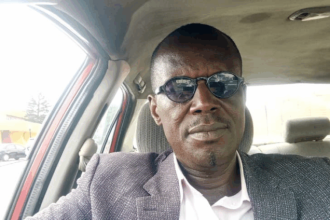
Yet, on the night of February 6, 2026, those 33 pages of mandates and ethics proved to be a hollow promise for 29-year-old engineer Charles Amissah.
His death, stemming from the refusal of emergency care by three major hospitals in Accra, was the focus of a recent broadcast of the Citi Breakfast Show. It brought up the national conversation of the “no-bed syndrome” and the systemic violation of Ghana’s established health protocols.
A Three-Hour Death Sentence
According to a situational report from the National Ambulance Service, Emergency Medical Technicians (EMTs) arrived at the scene within three minutes of receiving the distress call at 10:32 pm. Upon arrival, Charles Amissah was found lying supine with profuse bleeding from a deep shoulder laceration.
The crew stabilized him with a cervical collar, controlled the bleeding, and initiated oxygen therapy.
Despite his stable vitals at 10:36 pm, a blood pressure of 120/90 mmHg, and an SpO₂ of 99%, he would spend the next two hours and 18 minutes being shuffled between facilities until he went into cardiac arrest.
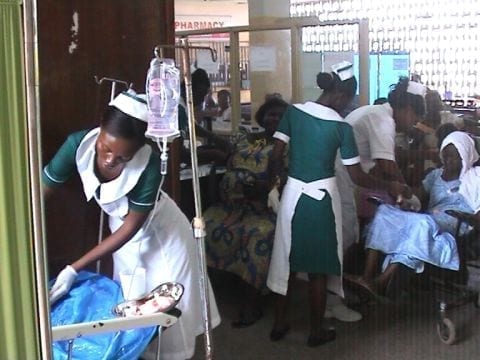
The victims’ journey included stops at the Police Hospital, the Greater Accra Regional Hospital (Ridge), and finally the Korle Bu Teaching Hospital. At each facility, the crew was met with the same response: no vacant beds available. Even when the ambulance EMTs offered to let the patient use the ambulance trolley to receive care, hospital staff at the Police Hospital and others refused to attend to the casualty or even take vital signs.
A&E Policy vs. Reality
This refusal stands in direct contradiction to the Ministry of Health’s “Policy and Guidelines for Hospital Accident and Emergency Services in Ghana” (2011). The guidelines mandate a triage system to classify clients based on priority needs.
Under these rules, patients whose assessment falls under Red, Orange, or Yellow categories shall be admitted to the A&E unit for further management.
This category would include a trauma victim with profuse bleeding, like Charles Amissah. The policy also requires a functional resuscitation area in all hospitals for patient stabilization. At Korle Bu, however, the crew negotiated for 30 minutes, explaining that continued movement placed Amissah in a dangerous situation, yet no staff intervened until after he was dead.
The “No Bed” Excuse and the Ambulance Trolley
On the Citi Breakfast Show, co-host Francisca Kakra Forson stated that this excuse often masks deeper professional failures, especially with the hospital’s failure to act professionally. “I think that beneath this no-bed syndrome that we have entertained is a crisis that nobody is talking about, questioning whether staff have the requisite training or tools to even attempt stabilization.
The panelists expressed outrage over the lack of empathy and professional accountability. The general sentiments agreed that police must urgently identify and prosecute the hit-and-run driver, and that the medical officers involved at all three hospitals should be immediately interdicted pending a full investigation.
Another of the show’s co-hosts, Richard Dela Sky, argued the legal implications of the issue, suggesting that the hospitals breached their duty of care and that the family of the victim should take legal action against all three hospitals.
He argued that the state should be held liable for the conduct of these public health professionals. Commenting on the inequality of care, Richard Sky stated, “The ordinary people of Ghana should also see the same sense of urgency attached to their concerns” as the political elite.
Moving Toward Accountability
Health Minister Kwabena Mintah Akandoh has announced he will personally chair a committee to investigate the incident. But host of the Citi Breakfast Show, Caleb Kudah, believes the committee would be more effective with a neutral chairperson other than the minister.
As the investigation begins, the family of Charles Amissah remains in mourning, having only discovered his whereabouts three days after he went missing when they were directed to the Korle Bu mortuary.
The incident has left Ghanaians demanding that the A&E guidelines be enforced with actual sanctions, rather than just directives
The Policy and Guidelines document, signed by over 40 medical experts and consultants, was meant to ensure that all persons in Ghana have the right to receive quality accident and emergency care. For Charles Amissah, the policy remained on the shelf, while the no bed syndrome claimed another life on the streets of Accra.
The Citi Breakfast Show, airing on Citi FM, continues to set the agenda on governance and public policy, weekdays from 6:20 a.m. to 10:00 a.m., bringing decision-makers, analysts, and the public into one national conversation.
By: Sheba Araba Bennin/Channel One Research Desk