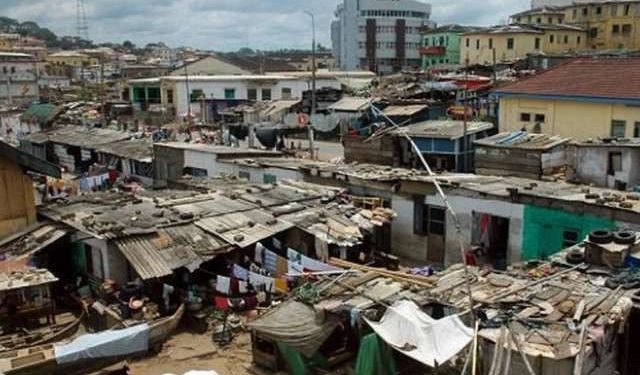
For decades, the global standard for measuring poverty was really simple. It was basically the question of how much money a person earns? However, this ‘definition’ has completely changed because of the insatiable needs of humans. Even more educational is the latest data from the Ghana Statistical Service (GSS) which indicates a rather more complex reality.
In Ghana today, being poor is not just about a lack of cash. It is about the overlapping hardships that define daily life. Think of the quality of the toilet to their ability to survive a medical emergency. Fresh data shows that, as of the third quarter of 2025 2.9% of Ghanaians approximately 7.2 million people are classified as multidimensionally poor.
While this suggests a strong improvement from the 24.9% recorded the previous year, it highlights a persistent segment of the population trapped in a cycle of multiple deprivations.
When is a person multidimensional poor?
Multidimensional poverty is measured using the Alkire-Foster methodology, which identifies deprivations across four key dimensions. Dimensions which include Health, Education, Living Conditions and Employment. In Ghana, this is assessed through 13 specific indicators, including access to electricity, sanitation, safe water, health insurance and school attendance.
Contextually, a household is officially classified as multidimensionally poor if it is deprived in at least one-third (33.3%) of these weighted indicators. This means a family could have a modest income but still be considered poor if they lack a decent toilet, have no health insurance and have children who are falling behind in school.
Suffice to say, poverty in Ghana is deeply shaped by geography. There is a stark rural-urban divide, with the poverty incidence in rural areas reaching 31.9%, compared to just 14.2% in urban centres. This gap is largely attributed to unequal access to basic services and productive economic opportunities.
Even more pronounced are the regional disparities. The North East and Savannah regions record poverty levels above 50%, more than double the national average. In contrast, Greater Accra maintains a poverty rate below 10%.
However, population density creates a different challenge. While the North has the highest percentage of poor people, populous regions like Ashanti and Northern each host over one million poor individuals in absolute terms.
The primary drivers
The most significant contributor to poverty in Ghana today is a lack of health insurance coverage, which accounts for 26.5% of the national deprivation score. For a poor household, a simple illness like malaria can become a financial catastrophe. Such a situation could force families to borrow money or sell assets to pay for care out-of-pocket.
Nutrition is the second-largest driver, contributing 14.4% to the index. This deprivation is particularly severe in households headed by agricultural workers and in the northern regions, where seasonal food shortages remain common.
Furthermore, a worrying trend has emerged in Living Conditions. Between the second and third quarters of 2025, overcrowding deprivation almost doubled. It rose from 11.4% to 21.6%. This rise is primarily an urban crisis, as rapid migration into cities forces many into high-density,
low-quality housing.
The data confirms that education and stable work act as safeguards against poverty. Households headed by individuals with tertiary education have a poverty rate of just 5.7%, compared to 38.5% for those with no formal education.
Similarly, employment type is a critical factor. Households headed by public sector workers record the lowest poverty rates (5.3%), while those headed by unemployed persons face the highest (35.6%). Alarmingly, the agricultural sector which employs many of the rural poor has a poverty incidence of 32.1%, reinforcing the need for modernisation in farming.
What needs to change
Policymakers are increasingly concerned about the simultaneous experience of multidimensional poverty, unemployment and food insecurity. Approximately 227,500 people aged 15 and older currently live with this triple burden. Unexpectedly, this extreme vulnerability is most concentrated in southern urban hubs like Greater Accra, Ashanti and Central regions, which together account for 57% of the triple-burden population.
This suggests that while cities offer better services on average, they also contain pockets of severe, overlapping deprivation where social safety nets are failing. What this means is that, reducing poverty in Ghana requires more than general economic growth. It demands practical, targeted solutions that address the specific deprivations holding households back.
Priority actions recommended by the GSS include expanding National Health Insurance (NHIS) coverage to protect against health shocks, accelerating investments in sanitation and housing, and strengthening school feeding programmes to ensure children stay in school. Although Ghana works towards the UN Sustainable Development Goals, the policy direction is clear. Ending poverty means improving lives in every dimension that matters, not just the one measured in cedis.
–
The writer, Nii Larte Lartey is a financial and economic reporter at Citi FM and Channel One TV.