


TUC, businesses decry water, power tariff hikes
The Trades Union Congress (TUC), businesses and their associations have expressed disappointment in the Public Utilities Regulatory Commission (PURC) and the government for pushing through yet another tariff increase without fixing the long-standing inefficiencies that keep utility costs unbearably high in the country.
Labour
Labour’s contention is that the increases were going to take effect on the very day “the paltry nine per cent increase in the minimum wage and the base pay by the government will also take effect, describing it as “the government’s New Year’s gift to Ghanaians.”
In a statement signed by the Secretary-General, Joshua Ansah, and issued yesterday, the TUC said the government granted a wage increase of 10 per cent this year and increased electricity tariffs cumulatively by more than 18 per cent.
It said as workers bemoaned the wage increase for 2026 in the light of the prevailing cost of living, the least they expected was for the government to spring a surprise on them with increases in prices of utilities.
“This increment has completely eroded the nine per cent wage adjustment for 2026. Clearly, government is demonstrating its insensitivity to the daily struggles of workers and Ghanaians,” the TUC stressed.
The stated stressed that workers could not accept the increases unless the government came back to the negotiating table to top up the wage increase for next year.
Anything short of that, the TUC said it would mobilise workers to resist the implementation of these insensitive increases in utility prices, adding that Organised Labour would organise a press conference on Monday to outline measures to address this obnoxious tariff increase.
Associations
The associations, including the Ghana National Chamber of Commerce and Industry (GNCCI) and the Food and Beverage Association of Ghana (FBAG), insisted that the implementation of the utility tariff increments for water and electricity would be a nightmare, cripple their operations and worsen an already punitive tariff environment.
In various interviews on the recent utility tariff increments, they argued that Ghanaian industries were already suffocating under electricity costs of about 13 cents per kilowatt hour — one of the highest globally — while competing manufacturing-driven economies pay less than five cents per kilowatt hour.
Rather, they maintained that the government must immediately work with the PURC to reverse the tariff structure entirely in favour of businesses as part of efforts to support the country’s industrial transformation agenda under the 24-Hour Economy initiative.
The associations called for a deliberate policy on utilities to support the local manufacturing sector to compete globally, expand or create jobs for Ghanaians.
New tariff
The PURC, last Tuesday, announced the approval of new tariffs, with electricity set to rise by 9.86 per cent and water by 15.92 per cent across all customer categories.
The adjustment, which takes effect on January 1 next year, was approved after completing the major Multi-Year Tariff Review Order (MYTO) process for the 2026–2030 period.
A statement signed by the Executive Secretary of PURC, Dr Shafic Suleman and issued last Tuesday evening, explained that the commission considered utility investment needs, industrial competitiveness, and overall consumer living conditions in undertaking the major review.
This exercise was distinct from the quarterly reviews, which focus solely on operational expenses (OPEX) beyond the control of utility service providers.
Speaking in an exclusive interview with the Daily Graphic on the new tariff announcement, the Chief Executive Officer (CEO) of the GNCCI, Mark Badu-Aboagye, did not mince words about the chamber’s discomfort with the new utility tariff adjustments, stressing that the increment presented a fresh wave of hardship for struggling industries already operating on thin margins.
“The initial request that the utilities were asking for wasn’t going to be possible, so we made it clear to them that any increase in utility costs is inherently damaging to business operations,” he said.
He explained that electricity prices in Ghana were already among the highest on the continent, and even “a minimal increment is going to add up to the cost,” a situation he describes as deeply worrying.
“If you check around the sub-region, the cost of electricity per kilowatt hour in Ghana is higher than in most countries in Africa,” the CEO of GNCCI added.
He maintained that the tariff hikes left manufacturers with only three difficult choices — absorb the cost, partially pass it on to consumers, or transfer it entirely to the market, depending on their profit margins and current financial health.
Mr Badu-Aboagye stressed that the 15.92 per cent increase in water tariffs was alarming for beverage and agro-processing firms whose operations rely heavily on water.
“For some of these companies, even 0.1 per cent is a higher cost to them.
Businesses are not different from consumers and will feel the impact just as sharply,” he said.
Special industrial tariff
The GNCCI CEO argued strongly that the country must confront a strategic national question — whether it truly wants to industrialise.
“If you really want to drive the industrial sector, then we should give them a special dispensation,” he said.
He urged the government to consider a different tariff structure for industries, especially export-oriented sectors such as steel, agro-processing and pharmaceuticals.
“The cost per kilowatt hour for electricity for the industrial sector in Ghana, around 13 cents, is among the highest in the whole world. China is doing three cents, America is doing two cents,” he said.
He explained that without deliberate policy support, local manufacturing could not compete, expand or create jobs.
“Energy is critical—the cost of electricity is critical for industrialisation.
If you cannot support businesses, then we should forget about industrialisation,” he warned.
Industry is shocked
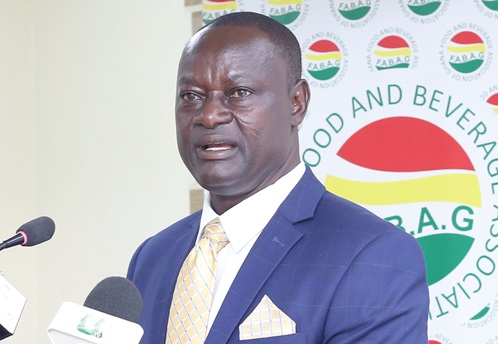
The Chairman of FBAG, Rev. John Awuni, expressed deep disappointment over the decision to approve new utility tariff increments.
He explained that the business community felt ignored despite submitting several formal petitions to the highest levels of government.
“We sent a petition to the President, and he referred it to the Energy Minister; we copied Parliament’s Committee on Mines and Energy and the PURC itself, so the least we expected was an invitation for proper dialogue.
“The association deliberately explained in its petition that the country needed deep reforms in the energy sector, particularly ECG, rather than hasty upward tariff adjustments,” he said.
ECG clean-up
The FBAG Chairman described the decision to increase tariffs as unjust, especially after the Electricity Company of Ghana (ECG) was “embarrassed and exposed” at the Public Accounts Committee for overrunning its budget by 189 per cent.
“ECG’s power loss of about 32 per cent is unacceptable, and so, rewarding such inefficiency with tariff increments is total injustice to Ghanaians.
“Any tariff increment, whether 0.5 or one per cent, amounts to injustice, because the real priority is cleaning up ECG, which he described bluntly as a cancer in the economic development of this country,” he said.
Counterproductive
Rev. Awuni warned that the new increment will only worsen hardships for both businesses and consumers.
“Ghana already pays one of the highest industrial tariff rates in Africa and even compared to Europe,” he said.
He also expressed worry about how the latest increment would undermine Ghana’s industrialisation drive, especially the 24-Hour Economy ambitions, as “demand is already extremely low, and no manufacturer will run a 24-hour shift when tariffs keep increasing.”