From The Customer-centric Entrepreneur Project
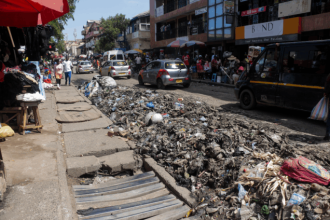
In the predawn darkness of Accra’s Agbogbloshie market, Asana (not her real name) begins her daily routine. By 5:30 AM, she is already navigating the city’s streets with a large sack, collecting discarded plastic bottles from rubbish bins, street corners, and drainage channels. By noon, when the sun has become oppressive, she will have gathered perhaps 200 bottles—enough to earn 15 to 20 Ghana cedis if she can find a buyer.
Asana is one of thousands of informal waste collectors across Ghana whose invisible labour keeps cities marginally cleaner while they themselves remain marginalised, unprotected, and impoverished. Yet as the Mohinani rPET Project gathers steam, these waste pickers stand at the threshold of a transformation—from informal, precarious work to formal employment with dignity, stable incomes, and social protection.
This transformation is central to the project’s success and to Ghana’s broader development goals. Without formalising and empowering the informal waste sector, Ghana cannot achieve the collection rates necessary to feed an 18,000-tonne-per-year rPET facility. And without providing dignity and fair compensation to waste workers, Ghana cannot claim to be building an inclusive, equitable circular economy.
The Current State: Exploitation Hidden in Plain Sight
Ghana’s informal waste collection sector operates largely in the shadows, despite performing essential environmental services. Most waste pickers work without contracts, safety equipment, or any form of social protection.
They navigate traffic-choked streets, dig through unsanitary waste, and expose themselves to sharp objects, toxic substances, and infectious diseases. There are no pensions, no sick leave, no maternity benefits—just the daily struggle to collect enough material to survive.
The economics are punishing. Collectors typically sell to intermediaries who pay minimal prices and then resell at substantial markups. A kilogram of PET bottles that a collector might sell for 50 pesewas could be worth 1.50 cedis or more by the time it reaches a processing facility.
Women and children are disproportionately represented among waste pickers, often driven by extreme poverty and lack of alternatives. The social stigma compounds the economic hardship—waste pickers are often viewed with disdain rather than recognised for the environmental service they provide.
Perhaps most troubling is the complete lack of organisation or bargaining power. Individual waste pickers have no leverage to negotiate prices or working conditions. They are price-takers in the most literal sense, vulnerable to intermediaries who can lower prices at will.
The Formalisation Opportunity: Building Collective Strength
The Mohinani rPET Project creates an unprecedented opportunity to transform these exploitative conditions into stable, dignified livelihoods. Formalisation does not mean eliminating individual collectors—their local knowledge and community connections are valuable assets. Rather, it means organising workers into cooperatives or formal collection networks that provide structure, support, and bargaining power.
Worker cooperatives have proven successful in waste management sectors worldwide, from Brazil’s catadores cooperatives to successful models in India and Colombia. For Ghana’s rPET initiative, regional cooperatives could provide guaranteed pricing structures based on material quality, access to equipment like protective gear and collection carts, aggregation infrastructure for immediate payment, training programs on safe collection practices, and group purchasing power for supplies at lower costs.
Beyond cooperatives, the rPET facility itself will create direct employment opportunities—150-200 jobs at the processing facility, with thousands more across the broader collection and logistics network.
Formal positions might include collection route supervisors, aggregation hub operators, sorting and quality control workers, logistics coordinators, and community outreach officers. These positions come with employment contracts, regular salaries, and critically, access to Ghana’s social security system, including health insurance through the National Health Insurance Scheme and pension contributions through SSNIT.
Creating Stable Income Pathways
The Mohinani rPET Project’s economic model projects millions of Ghana cedis in payments to the informal sector—a substantial injection into some of Ghana’s most economically vulnerable communities. But stable income pathways require more than just higher prices. They require predictable payment systems using mobile money platforms for immediate payment upon material delivery, price transparency and stability based on clear pricing schedules, performance incentives rewarding quality and consistency, and access to financial services like microloans, savings accounts, and eventually mortgages or education loans.
Dignity, Fair Wages, and Social Protection
True formalisation must restore dignity through several critical measures. Safety and working conditions must include personal protective equipment—gloves, boots, reflective vests, and masks. Collection routes should minimise exposure to traffic and extreme heat, with rest periods, clean water access, and shade shelters as standard provisions.
Ghana’s public awareness campaigns must deliberately reframe waste collection as skilled, valuable environmental work. The government’s partnership with the Mohinani rPET Project creates opportunities for official recognition—perhaps annual awards for top-performing cooperatives or designation of a “Recycling Workers Day.”
Full formalisation means extending social protection to previously excluded workers: health insurance covering families through the NHIS, pension contributions ensuring retirement security, occupational injury insurance, maternity and paternity benefits, and skills training and education support. These benefits require partnerships between the rPET facility, cooperatives, and government agencies including the Ghana Revenue Authority, Ministry of Employment and Labour Relations, and Social Security and National Insurance Trust.
Targeted Support for Vulnerable Groups
Formalisation strategies must pay particular attention to women and young people who make up a significant portion of informal waste collectors. For women, flexible working arrangements accommodating childcare responsibilities, women-led cooperatives providing peer support, and zero-tolerance policies on sexual harassment are essential.
For youth, the challenge is different—ideally, young people should be in school rather than collecting waste. The formalisation process should include minimum age requirements preventing child labour while supporting families, education support programs helping young people transition back to school, apprenticeship opportunities for older youth interested in technical careers, and skills training in equipment operation and business development for young adults.
The Path Forward
Formalising Ghana’s informal waste sector will not be easy. Success requires inclusive planning where waste pickers themselves design formalisation strategies, phased implementation starting with pilot cooperatives before scaling nationwide, government facilitation removing bureaucratic barriers, and patient capital for initial investments in infrastructure, equipment, and training.
A Revolution in Value and Values
The transformation of Ghana’s waste pickers from marginalised labourers to formal sector workers and entrepreneurs is central to the rPET project’s moral and practical success. Morally, because sustainable development that leaves the most vulnerable behind is no development at all.
Practically, because Ghana cannot collect 900 million bottles annually without the dedication, local knowledge, and labour of thousands of waste collectors working with dignity and fair compensation.
When Asana begins her morning rounds in the future, she will not be alone and unprotected, hoping for 20 cedis if luck holds. She will be a member of a cooperative, wearing provided safety gear, following an established route, confident that her materials will be purchased at fair, transparent prices.
Her children will be in school, supported by her stable income. She will have health insurance, pension contributions, and the social recognition that her work contributes to national environmental and economic goals.
This is not utopian fantasy—it is the achievable outcome of deliberate, inclusive formalisation strategies. The bottles Asana collects may be waste, but her labour, dignity, and dreams are certainly not. Ghana’s circular economy must be circular in its benefits as well—creating value that flows to every participant, especially those whose invisible work has kept the cycle turning all along.
This article is part of a series exploring Ghana’s rPET recycling initiative. Next Monday: “The 900 Million Bottle Challenge: Building Ghana’s Collection Infrastructure”
For information on upcoming entrepreneurship initiatives regarding rPET, contact The Customer-centric Entrepreneur Project on +233 24 306 5555