



Men, Get Screened: The Importance of Breast Cancer Awareness
Even though breast cancer is a significant health concern that affects both men and women, many people, especially men, are hesitant to get screened due to various concerns.
Isn’t it interesting that some men still believe they have little or no flesh on their chest, so there’s no place for a lump to hide?
On Sunday, October 26, I had an interview with some men on the sidelines of a health screening at they expressed their reservations about breast cancer screening.
“I find it awkward to have women whom I have no romantic relationship with touching my body, especially my nipples,” one man said.
“I just can’t bring myself to do that. If they had a male professional, it might be different.” Another man echoed similar sentiments, stating that he wouldn’t allow anyone, male or female, to touch him for breast cancer screening. “I’ve learned how to do self-examinations, and so far, it’s been good,” he claimed.
These concerns for me clearly highlight the need for more awareness and education about breast cancer and the importance of screening, as well as the importance of having male healthcare professionals available for screenings.
I observed that many did not prioritize the issue of breast cancer even though it could affect anyone, regardless of gender. Health personnel over the years have hammered the fact that, early detection was crucial for effective treatment, and screening could help identify potential issues before symptoms appeared.
However, the situation isn’t a hopeless one as one man is leading by example. The Chairman of the 50th Anniversary Committee for the Holy Family Akan Society, which organized a health screening in collaboration with the Parish Youth Council of the Our Lady Queen of Peace Catholic Church in Madina in the Greater Accra Region Mr. Patrick Amoah Sarfo decided to get his breast screened. He was the only male who participated in the screening and shared his experience in an interview.
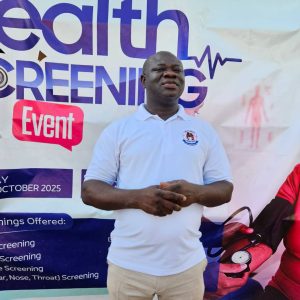
Picture of Mr. Patrick Amoah Sarfo
“I heard that males can also get breast cancer, and I thought, why not let me go and get screened? Let me lead by example,” Mr. Sarfo said.
The 44 year old Auditor emphasized the importance of self-examination. He said, he takes his health seriously and encourages others to do the same. He admitted that he also performed self-breast examinations regularly. The Chairman for the Anniversary Committee however admitted that the screening process wasn’t very comfortable with female health personnel and suggested that males should be brought on board to handle men as he believes that could encourage more men to participate.
“I would like to appeal that anytime a team was going to do a health screening, they should have a male on board” he said.
At the screening event, over 140 women walked in and out of the screening room, showcasing their proactive approach to their health.
A Palliative Specialist from the Korle Bu Teaching Hospital(affiliated to the Surgical Department), Ms Tabitha Gyanewaa Quaidoo was one of the leaders for the screening exercise.
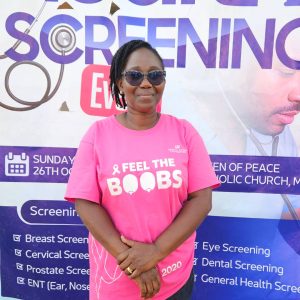
Ms Tabitha Gyanewaa Quaidoo
She observed that people still didn’t believe men also got breast cancer. “They say they don’t have breasts, but we all have breasts, just that theirs is not out like ours,” she said. She shared an experience with a gentleman who had come to get screened earlier but left once he found out no other males had participated.
Ms. Quaidoo emphasized the importance of prioritizing one’s health, regardless of what others do. “When it comes to health, don’t let others dictate what you should do because everyone’s situation is unique,” she advised.
Out of the approximately 140 participants who got screened, ten were identified as being at risk and were advised to undergo further testing, including breast scans and mammograms, to determine the next course of action. She commended those who got screened for prioritizing their health and applauded the church for organizing the health screening. She also appealed to the leaders to repeat it in subsequent years, as it helps address health issues among church and community members.
She also stressed the need for advocacy for male participation to help get more men to get screened in future event.
An 82-year-old woman who participated in the screening said she had made it a habit to get screened whenever she heard about a screening event. “It is good to get screened because it gives you a peace of mind knowing you are safe,” she said. “The good news is that most screenings are free of charge, so why shouldn’t anyone take advantage of it?” The octogenarian urged the youth to take breast screening seriously to avoid being taken by surprise.